They takeLOST really seriously over here. Season 5 premiered on the 21st in the US, but it doesn't premiere until the 25th here in the UK (thanks Sky1). I had resigned myself to wait until Sunday, but the island has been taunting me relentlessly with billboards like this one around London.
Thanks to Christopher Hester for the photo. I couldn't find it anywhere else on the internet, and every time I've seen the billboard ("advert" to the locals) from the bus, I haven't had my camera handy.
Unfortunately, I never got around to growing my pre-season solidarity beard for Jack. Oh well. I'll cheer myself up with jackface.com.
It goes without saying that the British love their pubs. They don't differ that much from American bars save for a few ways. A British pub has notoriously better food, its patrons are happy, and the hard cider flows from its tap like a golden, inebriating river.
Hard cider is a popular drink. Unfortunately, bars in America don't offer it. Probably because it sounds like a bitch drink (which it isn't over here). That's too bad, because it (a) is delicious and (b) has more alcohol per volume than beer. And because it's sweet, you justify drinking it with any meal. Lunch? Of course! Dinner? Yes! Breakfast? It's juice! Desert? It's sweet, isn't it?
Here are some of the most popular brands offered at these fine establishments (I'll add more as I discover them):
GOOD Magazine has a really cool graphic explanation of the cost of the war in Iraq. It might be a little hard to understand, but it's a clever way to present the issue graphically, as opposed to a boring chart.
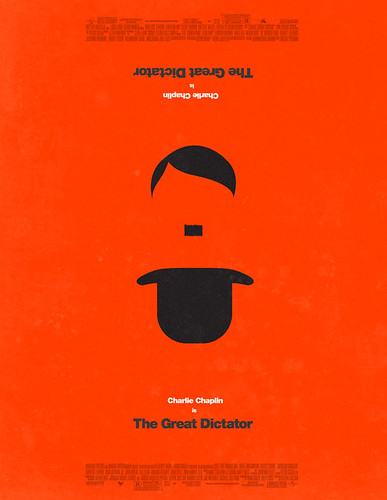
I recently re-discovered Olly Moss, a graphic designer from England. I first learned about him when he'd post his work in the Penny-Arcade forums years ago. Even if you've never heard of him, you've definitely seen his work. He's responsible for, like, half of the shirts on Threadless (maybe that's a slight exaggeration). Like this one (spoiler alert):
And one of my brother's personal favorites, "In Case of Zombies" (I can't find the higher-res version on Threadless):
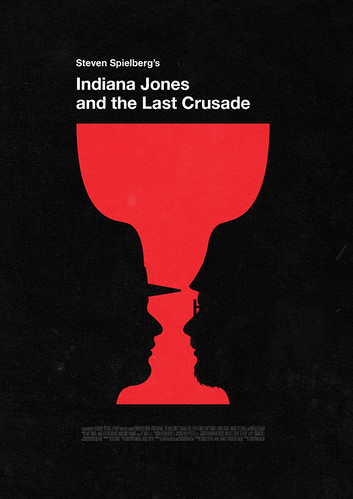
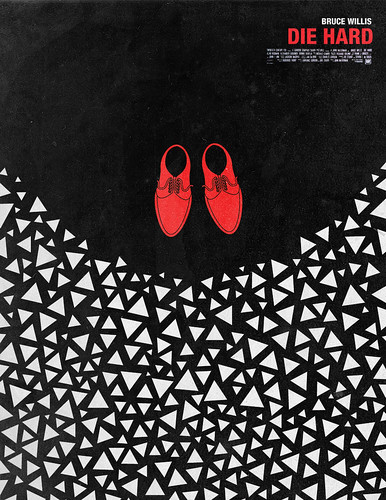
His latest project is a collection of re-imagined movie posters, which I'm really digging. Check them all out here.
And (of course) my favorite:
Your homework assignment is to go check out his work at his website, www.ollymoss.com, and his Flickr page. He's only 21, which means (a) he's going places and (b) I haven't accomplished much in the same amount of time.
Over the course of my winter break, I have had zero motivation to do any graphic design. Maybe TOA killed all the fun I had with it. But checking out Moss' work makes me want to get back to designing. I think I'll take a cue from him and start by re-designing some of my favorite album covers.
I was in the process of coming up with a "Best Songs of 2008" list, like everyone else on the internets. But when I realized that I was struggling to come up with even ten songs that belong on the list, I figured I should stop. Instead of coming up with a list of best songs – because (a) that's stupid and (b) everyone makes the lists to show everyone else how "cool" their musical tastes are – I'm just going to share my favorite song of the year: "Get Busy" by the Roots, featuring Dice Raw and Peedi Peedi. Happy new years!
With its primitive drums (courtesy ?uestlove) and dirty synths, the song's menacing beat is the perfect example of the atmosphere that the Roots crew created in Rising Down: dark, compact, and heavy. Every verse is flawless, and it's near-impossible to pick a favorite line. But if I had to choose, I'd say this Dice Raw rhyme is hard to beat: "I'm kind of like W.E.B. Dubois [pronounced "Du-boys"], meets Heavy D and the Boyz." Along with Black Thought's "My squad's half-mandrill, half-Mandela" and "Part Melle-Mel, part Van Halen," the lyrical content in "Get Busy" pretty much sums up what The Roots is all about. To top it off, DJ Jazzy Jeff (of ...and the Fresh Prince fame) makes a guest appearance to scratch on the song's bridge. Basically, "Get Busy" is the perfect hip-hop song.
I would have picked "Rising Down," simply because it has the one of Mos Def's best verses ever, and the beat is as good as – if not better than – "Get Busy," but I just couldn't because of how awful Styles P is in the song. So, here's a live version without him!
With the recent explosion of "serious" film adaptions of graphic novels, Hollywood* has discovered (better late than never) an untapped well of material that, in the hands of capable directors, can be turned into a critically and financially successful franchises. So far, Frank Miller's Sin City (really, the film that kick-started this phenomenon) and 300 have been adapted to film in a strict panel-to-frame fashion, allowing the directors – Robert Rodriguez (with Frank Miller himself) and Zack Snyder, respectively – to maintain an almost exhaustive degree of fidelity to the original work. In these examples, the comic is essentially the film's storyboard. On March 6th, Alan Moore's 1986 graphic novel Watchmen, again adapted by Snyder, will be released in theaters. Now, it's only a matter of time before Hollywood adapts the other** 1986 graphic novel that helped revolutionize (and bring more critical respect to) the comic medium to this day: Frank Miller's The Dark Knight Returns.
The Dark Knight Returns is without a doubt my favorite graphic novel of all time. And while Miller's work has taken a nose-dive since Sin City (seriously, the dialogue in All Star Batman and Robin sounds like a seventh-grader wrote it, as you will see below), his writing and artwork in DKR is, in my opinion, the best example of the popular Comic's (big "C") potential as a storytelling medium.*** In a nutshell, DKR takes place twenty years in the future. Batman, who at this point is in his fifties, comes out of retirement to clean up a Gotham City in which criminals freely roam the streets and politician wallow in corruption. Basically it works as a commentary on society, violence, and the media in the mid-eighties (and, I guess, today).
But we're not talking about that right now. Recently, I read on Slash-Film about the possibility of Snyder (again) adapting DKR to film:
At the [2008 Comic-Con] Watchmen panel, Zack Snyder expressed his love for Frank Miller’s The Dark Knight Returns, in response to a question about the more mature direction of comic book adaptations.
“There are a lot of other graphic novels out there, but I would love to see Frank Miller’s Dark Knight made into a movie, but that’s just me.”
Later at the Entertainment Weekly Visionaries panel, Frank Miller told Snyder “You can do it anytime you want to Zack”. To which Snyder said he was making a note of Miller’s response. [Full article]
I'm not saying whether or not it should be made into a movie, even if the more-than-capable Snyder wound up directing it. After all, Christopher Nolan has a very good thing going with his Batman franchise.**** But if it were to be made, there's only one man that should – hell, can – be considered for the roll of the aging Batman. This guy:
Clint Eastwood. If you're asking why (which you shouldn't be), here are four reasons for you.
Batman is the most bad-ass character ever. It's only fitting that the most bad-ass actor ever should play him.
Eastwood already has experienced portraying the second- and third-most hardcore vigilantes in the fictional world (Dirty Harry and The Man With No Name – you can decide who gets which spot). Nowhere to go but up.
The part was practically made for him. It's explicitly stated in All Star Batman and Robin (which shares narrative continuity with the rest of Miller's Batman stories, including DKR) that when speaking as Batman, Bruce Wayne imitates Clint Eastwood:
Why get an actor to imitate Clint Eastwood when we can get the gravel-voiced god himself? Christian Bale is universally revered for his portrayal as Batman, even though his Batman-voice leaves something to be desired (a dramatic line that doesn't leave the audience snickering when it's spoken?). Now imagine if we can get the award-winning actor, still in his prime (just today I saw that he won the Chicago Film Critics Association Award for Best Actor in Grand Torino and there's talk of a best-actor Oscar nomination), to deliver those lines about hockey-pads (or the lack of) and fireworks (again, the lack of) in his trademark voice, we would have the Dark Knight-incarnate captured on film.
The mask would only make his sneer look even meaner.
Of course, there are a few incongruities inherent with my proposal. First, the Batman in DKR is in his mid-fifties. Eastwood, on the other hand, is in his late seventies (seventy-eight to be exact). This problem can be solved by simply ignoring it. I dare you to find me another fifty-year-old that kicks as much ass as he does on a regular basis (Blood Work, anyone?). Second, Batman (especially Miller's version) is huge, physically. Eastwood has always been a pretty skinny guy (apparent in the weirdly-common bathtub scenes in his Westerns – a scene in High Plains Driftercomes to mind), but if Bale could pull it off just months after filming The Machinist (Google Image Search it), Eastwood should be able to.
Eastwood has made is clear that he won't retire from acting any time soon, as long as the role he takes on gives him "a hurdle to get over." Taking on the role of the one of the greatest heroes in the last century would provide just that challenge. And the best part is, if the fan boys don't like it, he'll respond the same way he would if Michael Moore came to his door with a camera: Squint and whisper, "I'll kill you." True story (Google it).
* One of my favorite synechdoches. ** For the uninitiated, 1986 is seen as a sort of Renaissance for the comic medium. That year, Frank Miller released The Dark Knight Returns and Alan Moore released Watchmen (the twelve-issue series finished some time in 1987). These books (with the help of Art Spiegelman's Maus, which started in 1977) changed the public perception of comic books, and critics began taking the medium seriously as a legitimate art form. For example, Watchmen is on Time Magazine's list of the 100 best novels, and Stephen King referred to DKR as "the finest piece of comic art published in popular edition." One of the reasons for this was the adult content present in the books. Cold War politics, nuclear war, and the media's effect on society are thematic elements in both works, not to mention the graphic violence and sexuality depicted (all to make a point of course) made the comics for a decidedly mature audience. These authors had moved their comics into high art. Unfortunately, this meant that the decade of Generation X comics that followed would try to imitate their "grim and gritty"-ness and, of course, leave out the self-consciousness and the post-modernism that made Watchmen and DKR such substantive and provocative works (think Spawn). *** This is definitely a point of contention when I talk to other comic fans. I want to make it clear that I think Watchmen is undeniably a grander achievement than DKR as well as a better work. Watchmen's plot, along with Dave Gibbons' artwork, took the comic medium to a level that it had never been before (and has yet to go again). To put it simply, it's deeper, more carefully constructed, and smarter than any "book" or movie that I've ever read. And it's a good story. But when it comes down to it, I think DKR is a better example of how dynamic and effective comics can be in telling stories. Miller's artwork isn't constrained to a 3 x 3 panel scheme like Gibbons' (which is probably my least favorite part of Watchmen) and makes it more interesting visually, as a result. Miller's graphic elements, like panels shaped as otomotopea, reduce the seperation between text and image, making for a better-executed Comic (big "C" again). Comic scholar Hillary Chute talks about conflicting "flows" when reading comics, in that you read (and process) a comic at two speeds: quickly for the images, and slowly for the text. In addition to the text/graphic tricks Miller employs, DKR's plot is just complex enough not to require the reader to labor over a panel as the imagery is simultaneously commanding him or her to move on to the next , as Watchmen does. In other words, the two reading speeds of DKR are closer to one another, which gives the book a better narrative flow. Of course, there's nothing wrong with the way Watchmen does things. It's enjoyable and rewarding to dig deep into the narrative and wrap your head around the complex world that Moore has crafted (not to mention finding all of the hidden symbols and meanings in each of Gibbons' panels). But if we're talking about Comics as an idea(l), I think DKR represents that better. **** The trend towards realism in Nolan's movies is what makes them so successful. The Dark Knight was so much better than Batman Begins because there were almost no "fantastic" elements. Gimmicks like a microwave weapon, the monorail, and the narrows were thankfully absent from the sequel (which really just took place in a Chicago populated by Batman, the Joker, and Harvey Dent). When The Dark Knight did have anything that might be too sci-fi (like the Batpod), it was worth it, and rare enough to not feel like overkill. Care would have to be taken in adapting DKR in order to balance the realism that works so well with the clearly superhuman and sci-fi elements of the comic. I would take a cue from Blade Runner or Aliens – dark atmospheres that are clearly futuristic, while unabashedly incorporating anachronisms into the environments. Or just see how Watchmen fares and sign Snyder up to make a shot-for-shot adaptation like he usually does. ***** I should also mention that I think Bale rocks, and you couldn't ask for a better Batman (unless, you know, it's Eastwood). No disrespect, Mr. Bale (after all, I do have a cardboard cut out of you in my room).




 Posts
Posts

